Welcome to Zhejiang Yulian Technology Co., Ltd. | Call Us: +86-577-62893739


Views: 0 Author: Site Editor Publish Time: 2026-08-17 Origin: Site


Modern vehicle architectures depend entirely on flawless electrical systems. Engineers face a tough challenge when designing internal combustion engines, electric vehicles, or advanced driver-assistance systems. Electrical failure remains a leading cause of costly warranty claims today.
Balancing strict OEM compliance, harsh environmental realities, and unpredictable supply chains frustrates many teams. Choosing an incompatible part often triggers catastrophic system breakdowns. Field failures cause product recalls and damage brand reputation instantly.
We provide an evidence-based framework for categorizing and evaluating these vital components. You will learn how to match specific interfaces to vehicle zones and navigate complex sourcing risks. This guide helps you source the ideal automotive connector to guarantee long-term system reliability and commercial viability. Follow this framework to eliminate guesswork and streamline your engineering decisions.
Selecting an automotive connector requires matching mechanical and electrical performance to specific vehicle zones (e.g., cabin vs. engine bay).
Compliance with industry standards (like USCAR-2 or LV214) is non-negotiable for mitigating implementation risks and preventing field failures.
Integrating an automotive waterproof connector is essential for exterior and chassis applications, heavily relying on IP67/IP69K ratings.
Effective procurement strategies balance component lead times, tooling costs, and supplier validation to optimize total cost of ownership.
Cars no longer rely on simple, point-to-point wire harnesses. They utilize complex zonal architectures. This architectural shift increases the risk of signal degradation. It also heightens the chance of critical power failure. High-speed data networks demand absolute physical precision. Any slight disruption in connectivity compromises the entire vehicle network.
Poor component selection carries severe real-world impacts. Product recalls devastate brand reputation rapidly. Assembly line downtime bleeds money every minute production stops. More importantly, compromised vehicle safety puts human lives at risk. You cannot afford arbitrary part selection when deploying advanced driver-assistance systems.
What defines a successful deployment? First, you need zero-defect mating on the assembly line. Operators must connect parts easily without applying excessive force. Second, lifecycle durability must match the vehicle's entire lifespan. Finally, scalable procurement ensures steady production volumes. You must align engineering specs directly with supply chain capabilities.
Best Practice: Always specify physical interfaces early in the design phase. Late-stage modifications often force awkward harness routing and increase electrical interference risks.
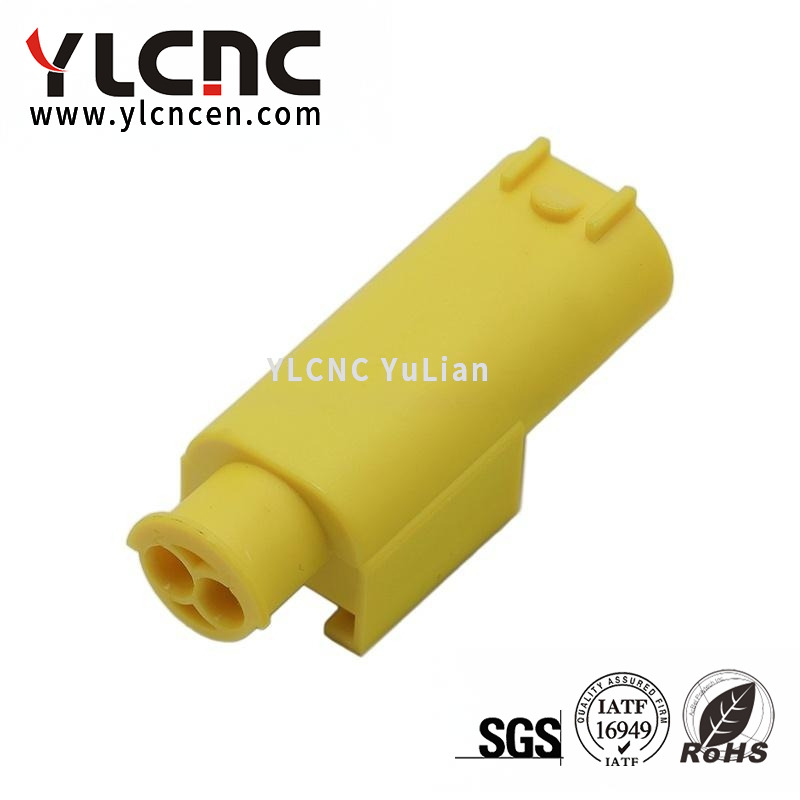
Wire-to-wire designs serve a specific purpose. They work perfectly for inline splicing across long distances. Engineers use them heavily in modular harness designs. They allow operators to connect two separate wire bundles securely. This modularity speeds up final vehicle assembly significantly.
Wire-to-board and board-to-board interfaces handle different tasks. They enable crucial printed circuit board (PCB) integration. Space constraints dictate their compact design. Engineers must evaluate solder joint stress under intense vibration. Rigid board-to-board setups often fail if chassis flex puts torque on the PCB mounts.
Pin count directly influences physical design. Simple 2-pin setups work well for basic temperature sensors. Conversely, central control units need massive multi-pin arrays. High-density designs save valuable packaging space inside tight modules.
However, implementation presents serious physical challenges. Higher pin counts increase insertion force requirements exponentially. They also necessitate stricter alignment tolerances during manual assembly. Operators struggle to push 64-pin blocks together without ergonomic assistance mechanisms like lever locks.
Electrical loads dictate material choices. Low-voltage signal types handle delicate data transfer. They require gold-plated contacts to prevent micro-fretting and data loss. High-voltage (HV) variants manage extreme power loads instead.
Electric vehicle (EV) powertrains rely heavily on these HV solutions. They require robust shielding against electromagnetic interference. Furthermore, they utilize High Voltage Interlock Loops (HVIL). This safety feature shuts down power instantly if the housing separates accidentally.
Infotainment screens and power seating controls live here. The engineering focus rests heavily on miniaturization and user ergonomics. Environmental sealing requirements remain much lower. Moisture rarely reaches these protected internal zones.
Designers prioritize high-density packaging for cabin electronics. They use unsealed headers to save weight and reduce tooling costs. However, they must still account for passenger-induced vibrations and extreme cabin temperatures during summer months.
Conditions inside the engine bay turn hostile quickly. High thermal shock resistance becomes absolutely mandatory. Components endure freezing starts and rapidly heat up to extreme operating temperatures. Vibration tolerance must meet rigorous dynamic standards.
Chemical resistance also plays a vital role. Parts must survive exposure to motor oil, brake fluid, and antifreeze. Robust locking mechanisms prevent accidental disconnections. Engineers mandate Connector Position Assurance (CPA) locks to survive engine block resonance.
Lighting assemblies, anti-lock brakes, and external sensors face brutal elements daily. You absolutely need a reliable automotive waterproof connector here. Standard unsealed housings fail within days when exposed to road salt and deep puddles.
Evaluating sealing technologies matters greatly. IP67 ratings handle temporary submersion during heavy rainstorms. IP69K ratings withstand high-pressure, high-temperature washing at service stations. Engineers utilize specialized radial and axial silicone seals to block moisture ingress effectively.
Automotive Sealing Standards Comparison
Protection Rating | Testing Condition | Ideal Vehicle Zone | Typical Seal Design |
|---|---|---|---|
IP65 | Low-pressure water jets | Trunk interiors, door panels | Basic perimeter gasket |
IP67 | Temporary submersion (1m for 30 mins) | Lower chassis, wheel speed sensors | Radial silicone ribs |
IP69K | High-pressure/temperature steam wash | Front grille, exposed undercarriage | Matte axial seals, robust housing |
Trusting a basic manufacturer datasheet invites disaster. OEM integration demands verifiable, standardized proof. You must ensure USCAR-2, ISO 8092, and LV214 compliance. These global frameworks guarantee baseline reliability across the entire industry.
USCAR-2 defines strict performance testing for electrical terminals. LV214 dictates rigorous standards specifically adopted by European automakers. These tests simulate years of road abuse inside a laboratory environment. Never approve a component lacking these specific certification documents.
Physical durability matters immensely. You must assess housing strength over the vehicle's entire lifespan. Terminal retention force proves critical here. Terminals must resist backing out under harness tension.
Electrical reliability prevents system degradation. Extreme loads cause rapid voltage drops if contacts degrade. Superior plastic insulation prevents disastrous short circuits between adjacent pins. Keep contact resistance consistently low to maintain high-speed signal integrity over decades.
Common Mistake: Relying solely on standard datasheet specifications without running localized thermal shock testing. Always test components within their actual mounting environment.
Accidental un-mating destroys system functionality instantly. Terminal Position Assurance (TPA) ensures terminals lock fully into their plastic housings. If a terminal sits loosely, the TPA wedge simply will not close. This prevents invisible assembly errors.
Connector Position Assurance (CPA) guarantees the two mating halves lock completely. It provides a secondary physical latch. This mechanism prevents separation during intense vehicle operation. CPAs offer crucial visual and tactile feedback to line workers.
Vetting suppliers requires strict, uncompromising protocols. Always request independent, third-party testing reports. Demand full Production Part Approval Process (PPAP) documentation. PPAP Level 3 provides the deepest assurance of manufacturing consistency.
Material certifications verify the quality of raw plastics and metals. Inferior nylon blends become brittle and crack during winter driving. Authentic material tracking protects your final assembly from premature mechanical failure.
Proprietary terminal crimping tools carry massive hidden expenses. They lock you into specific vendors indefinitely. Switching suppliers later requires purchasing entirely new applicator dies for your factory floor.
Utilizing industry-standard automated assembly equipment offers better flexibility. Standardized terminals allow you to use existing wire processing machines. This approach accelerates production timelines significantly. It also lowers initial factory setup investments.
The aftermarket harbors significant counterfeit risks today. Fake components look identical but fail disastrously in the field. They use cheap alloys that corrode rapidly. Never source critical safety items from unverified broker networks.
Apply a strict shortlisting logic during procurement. Look for localized inventory and lead time flexibility. Ensure secondary sourcing viability exists for your chosen footprints. Global technical support capabilities separate adequate suppliers from true manufacturing partners.
Supplier Risk Evaluation Matrix
Evaluation Pillar | Key Metric to Review | Red Flag Indicator |
|---|---|---|
Quality Assurance | PPAP Level 3 Availability | Refusal to share raw material certs |
Manufacturing Scale | Automated assembly capacity | High reliance on manual terminal insertion |
Geographic Strategy | Regional warehousing presence | Single-factory sourcing without backup |
Successful harness integration requires careful, strategic alignment. You must balance complex environmental demands, rigid compliance standards, and fluctuating supply chain realities. Every vehicle zone demands a tailored engineering approach. You cannot apply a universal solution across an entire vehicle platform.
Take actionable steps today to secure your architecture. First, audit your current harness schematics to identify vulnerable unsealed interfaces. Second, request physical samples accompanied by matched LV214 or USCAR test data. Finally, initiate dialogue with vetted manufacturers early in your design cycle. Proactive collaboration ensures you build robust, failure-proof electrical systems.
A: Start by examining the outer housing for visual markers and OEM part numbers. Check the mechanical keying and color coding, which prevent mismatched connections. Measure the pin pitch carefully using digital calipers. If labels are completely worn out, referencing the vehicle’s official service manual ensures you find the exact replacement match quickly.
A: An IP67 automotive waterproof connector protects against continuous submersion in water up to one meter deep for thirty minutes. An IP69K rating offers much stronger industrial protection. It withstands close-range, high-pressure, and high-temperature water sprays. Use IP69K for exposed chassis parts facing aggressive pressure washing.
A: No, standard industrial connectors fail quickly in high-vibration environments. They cannot pass strict USCAR-2 dynamic vibration profiles. They also lack Connector Position Assurance (CPA) locks. Without a CPA, engine resonance easily loosens the mating halves, causing critical signal loss and immediate power failure while driving.


