Welcome to Zhejiang Yulian Technology Co., Ltd. | Call Us: +86-577-62893739


Views: 0 Author: Site Editor Publish Time: 2026-08-13 Origin: Site


Electrical failures in modern vehicles carry massive financial and reputational costs. A single malfunctioning pin can trigger millions in warranty claims. It can even spark widespread safety recalls. As the industry races toward autonomous driving (ADAS) and full electrification (EV), we see a dramatic shift. Engineers no longer treat these components as simple commodities. Instead, they represent critical failure points demanding rigorous scrutiny. You must evaluate them thoroughly to ensure system stability.
This article provides a comprehensive, decision-stage framework. It guides engineers and procurement teams through complex evaluation processes. You will learn how to validate and select the perfect automotive connector for your specific architectural demands. We cover everything from harsh environment testing to handling high-voltage EV requirements. By applying these principles, you protect your vehicle architectures against catastrophic field failures.
Reliability is quantifiable: Proper selection requires validating against strict environmental and mechanical metrics (e.g., thermal shock, vibration tolerance).
Architecture dictates design: High-pin-count and high-speed data requirements for ADAS demand different connector profiles than standard powertrain applications.
Standards are non-negotiable: Specifying any automotive electrical connector without verifiable USCAR-2 or LV214 compliance introduces unacceptable risk.
Supplier transparency matters: Shortlisting requires evaluating a partner's laboratory testing data, prototyping speed, and supply chain resilience.
Single-point connector failures rarely stay isolated. They cascade rapidly into systemic electronic control unit (ECU) malfunctions. When a single terminal loses continuity, the entire safety sensor network might go offline. This forces the vehicle into a restricted limp mode. Consumers blame the vehicle brand, not the component supplier. You must recognize the severe consequences of these seemingly minor hardware faults.
Implementation realities on the assembly line also dictate connector success. Poor connector selection impacts production efficiency daily. Consider the physical toll on factory operators. They connect hundreds of wire harnesses per shift. If a component requires excessive mating force, operators suffer ergonomic strain. This fatigue inevitably leads to blind-mating errors. A partially seated plug might pass initial end-of-line electrical tests. However, it will ultimately vibrate loose on the highway.
To avoid these disasters, we must redefine our success criteria. You cannot define reliability solely by functional specifications on a datasheet. True reliability means lifecycle endurance in harsh operating environments. It requires components to withstand decades of temperature swings, road salt, and engine vibration. Your selection process must prioritize long-term physical endurance over short-term electrical performance.
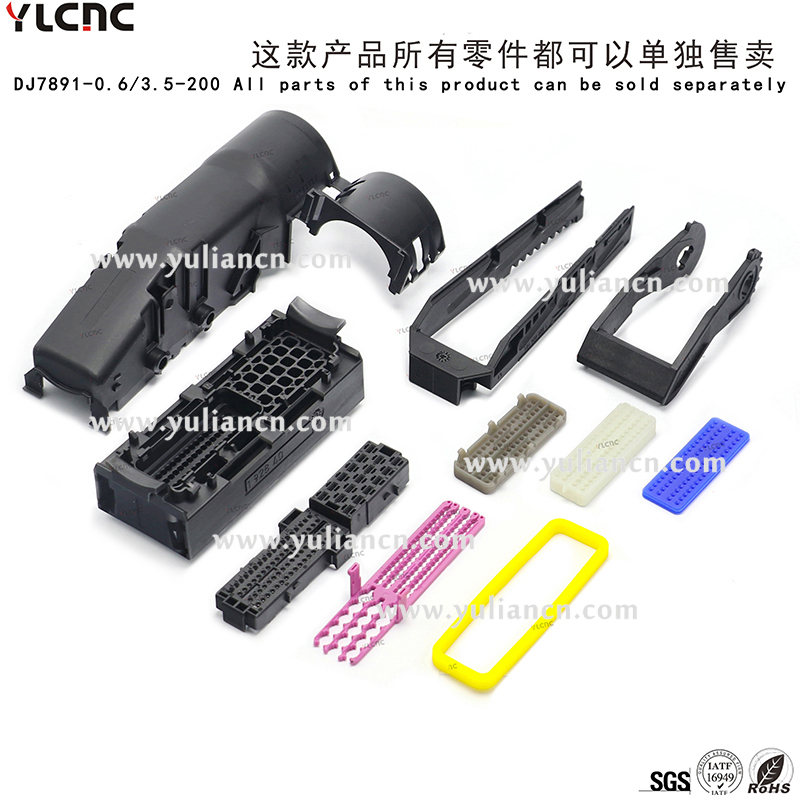
Engineers must evaluate every automotive electrical connector through a strict multidimensional lens. Missing even one dimension compromises the entire vehicle architecture. We break this evaluation down into four critical areas.
Automotive environments are incredibly hostile. You must assess ingress protection ratings rigorously. Most external vehicle applications demand IP67 or IP69K sealing. These ratings guarantee protection against aggressive fluids, fine dust, and high-pressure steam sprays. Engine bays expose parts to oil, brake fluid, and battery acid. Underbody routing faces constant attacks from corrosive winter road salts.
Evaluating thermal endurance is equally vital. Operating temperature ranges stretch from -40°C in winter to over 150°C near exhaust systems. Components face aggressive thermal cycling daily. Poor quality plastics turn brittle and crack under these rapid temperature shifts. You must ensure the housing materials maintain their structural integrity across the entire thermal spectrum.
Vehicles vibrate constantly. Engine blocks create high-frequency resonance. Potholes deliver violent, low-frequency shocks. You must verify vibration profiles to ensure contact stability under continuous stress. Micro-fretting occurs when terminals rub against each other during vibration. This strips away protective plating and invites rapid oxidation. Oxidation increases electrical resistance and causes terminal failure.
To secure these connections, you need specialized locking mechanisms. You should always look for Terminal Position Assurance (TPA) and Connector Position Assurance (CPA) features. TPA guarantees terminals lock fully into the housing. CPA ensures the two connector halves remain firmly mated. These mechanisms prevent accidental disconnects during assembly and extreme road vibration.
Modern vehicles manage massive electrical loads. You must balance current-carrying capacity with contact resistance and heat rise. High resistance generates excess heat. If a connector cannot dissipate this heat, the plastic housing melts. This leads directly to short circuits and vehicle fires. Engineers must size terminals correctly to handle peak currents without dangerous temperature spikes.
Signal integrity is just as critical for low-voltage applications. Modern vehicles route miles of data cables. You must mitigate crosstalk between closely packed wires. Electromagnetic interference (EMI) shielding becomes mandatory for sensor networks. Unshielded cables act like antennas. They pick up noise from alternators and high-voltage cables. This noise corrupts vital sensor data before it reaches the ECU.
Dense electronic packaging forces connectors to shrink. Engineers face strict physical constraints behind dashboards and inside door panels. However, miniaturization brings severe durability trade-offs. You navigate a fine line here. Reducing the pitch between pins saves space.
Unfortunately, smaller terminals bend much easier during assembly. They also carry less current and offer lower mating cycle lifespans. You must not sacrifice terminal strength for space savings. Look for intelligent designs utilizing specialized copper alloys. These alloys provide higher tensile strength for micro-terminals, preserving durability in compact footprints.
Marketing brochures often exaggerate performance metrics. You cannot trust datasheets without standardized lab testing documentation. Independent verification plays a crucial role in automotive engineering. If a supplier refuses to share detailed lab reports, you should disqualify them immediately. Verified testing separates robust engineering from cheap imitations.
We rely on core industry lenses to validate performance. The North American and European markets have established strict, unforgiving test protocols.
Table: Comparison of Core Automotive Testing Standards
Standard | Regional Origin | Primary Focus Area | Key Testing Metrics |
|---|---|---|---|
USCAR-2 & USCAR-21 | North America | General performance & crimp integrity | Thermal shock, mating force, voltage drop, vibration |
LV214 | Europe | Terminal physics & miniaturization | Crimp force monitoring, micro-terminal retention, fretting corrosion |
USCAR-2 and USCAR-21 serve as the North American benchmarks. They dictate performance testing at various development phases. They cover everything from basic mating forces to extreme thermal aging. LV214 serves as the European standard. It focuses heavily on crimp force analysis, contact physics, and miniaturized terminals. European OEMs developed LV214 specifically to address the failures of tiny pins in dense ECU clusters.
Testing transparency is non-negotiable. What should you look for in a supplier's lab reports? Look for documented methodologies. Ensure they detail exactly how they conduct accelerated aging. Check their salt spray corrosion test parameters. Did they test the part for 48 hours or 500 hours? True automotive-grade suppliers provide raw data plots showing resistance changes during thermal cycling.
The transition toward electrification and autonomy fundamentally changes component requirements. Standard internal combustion engine (ICE) connectors fail miserably when applied to next-generation architectures. You must source components engineered specifically for these modern demands.
ADAS systems generate terabytes of data. You must solve the bandwidth bottleneck for LiDAR, radar, and high-definition infotainment systems. Older networks operated at kilobits per second. Today, Ethernet networks push multi-gigabit speeds. This requires an automotive connector designed with strict impedance control. Slight variations in pin geometry cause data reflection and signal loss.
Managing spatial limits also complicates modern design. Zonal architectures centralize processing power but increase local wire harness complexity. High-pin-count blocks route dozens of signals through a single interface. As pin count rises, insertion force multiplies. Engineers must use lever-assist mechanisms to make these massive blocks manageable on the assembly line.
Electrification introduces lethal voltages into the vehicle chassis. EV architectures currently operate at 400V or 800V. You must evaluate dielectric withstand voltage carefully. If the plastic insulator cannot handle the electrical stress, the voltage punches right through it.
Clearance and creepage distances become vital for EV battery management systems (BMS). Clearance is the shortest distance through the air between two pins. Creepage is the shortest distance along the surface of the insulator. Both must be wide enough to prevent high-voltage arcing.
Safety-critical features protect mechanics and first responders. High-voltage interlock loops (HVIL) are mandatory. HVIL uses a sacrificial low-voltage circuit. If someone unplugs the connector, the HVIL circuit breaks first. This signals the main contactor to cut the high-voltage power instantly. Touch-safe designs add physical barriers. They prevent human fingers from ever touching live high-voltage pins.
Evaluating the component is only half the battle. You must evaluate the supplier manufacturing it. A brilliant design fails if the supplier cannot deliver it reliably at scale. You need a structured shortlisting logic.
First, analyze the customization versus off-the-shelf dilemma. Assess the cost-to-benefit ratio of custom tooling. Custom molds cost hundreds of thousands of dollars and take months to perfect. In many cases, modifying standard components offers a better path. A strong supplier helps you adapt an existing, proven design to your specific package constraints.
Second, evaluate supply chain resilience. Single-source failures cripple global vehicle production. Examine the supplier's manufacturing footprint. Do they have facilities on multiple continents? You must verify their dual-sourcing capabilities. Lead-time stability separates excellent partners from risky vendors. A resilient supplier buffers you against geopolitical shocks and raw material shortages.
Finally, assess their prototyping and engineering support. The value of rapid 3D modeling cannot be overstated. Can the supplier print a prototype housing in 48 hours for your space-claim tests? In-house tooling capabilities drastically reduce development timelines. Direct engineer-to-engineer communication during the design phase prevents costly late-stage redesigns. You need a partner who speaks the technical language of your engineering team.
Selecting the ideal connectivity solution requires balancing competing engineering demands. The right automotive electrical connector perfectly aligns mechanical ruggedness, advanced electrical performance, and strict industry compliance. You cannot achieve system reliability by cutting corners on validation testing or environmental sealing.
Move beyond basic marketing spec sheets immediately. Request detailed lab test data for every component you consider. Schedule an application-specific engineering review with your supplier to discuss thermal constraints and vibration profiles. By taking these rigorous steps today, you ensure your vehicle architectures remain resilient, safe, and innovative for decades to come.
A: USCAR-2 is the North American standard. It focuses broadly on general mechanical and electrical performance across the vehicle. LV214 is the European standard developed by German OEMs. It focuses heavily on terminal contact physics, crimp force monitoring, and the specific reliability challenges of highly miniaturized terminals.
A: Higher pin counts dramatically increase insertion forces, leading to assembly errors. They also increase the risk of signal crosstalk and make wire routing highly complex. To mitigate these issues, specialized high-pin-count designs use lever-assist mechanisms to reduce mating effort and internal shielding to protect signal integrity.
A: Automotive components are generally expected to survive 10 to 15 years of harsh use, equating to roughly 150,000 miles. Engineers use accelerated thermal aging, salt spray chambers, and intense vibration tables to simulate this long-term wear and tear in just a few weeks of laboratory testing.
A: No. Using standard industrial parts introduces massive risk. Automotive environments require specialized locking mechanisms like TPA and CPA to survive constant road vibration. Industrial parts lack these safeguards and often fail strict automotive-grade temperature and fluid resistance compliance, leading to fatal disconnects on the road.


