Welcome to Zhejiang Yulian Technology Co., Ltd. | Call Us: +86-577-62893739


Views: 0 Author: Site Editor Publish Time: 2026-08-24 Origin: Site


Modern vehicles function as highly complex rolling data centers and power grids. They rely on sophisticated electrical architectures to operate safely and efficiently every day. Carrying critical sensor data and high-voltage power simultaneously is now the standard requirement across the industry.
Component failure creates more than just a minor assembly inconvenience on the production line. It leads directly to expensive warranty claims, sudden system breakdowns, and severe safety recalls. Engineers must specify connection systems perfectly to prevent these catastrophic field failures.
Understanding exactly how an automotive connector functions under intense operational stress remains essential. You need this knowledge to evaluate complex vendor claims objectively during the procurement process. This brief overview breaks down core electromechanical principles, failure risks, and objective evaluation criteria to help you specify the right components.
Connector functionality relies on a balance of contact physics (low electrical resistance) and mechanical stability (vibration resistance).
Specifying an automotive sealed connector is mandatory for aggressive environments but introduces cost and spatial trade-offs.
Objective evaluation requires validating components against strict, verifiable industry testing standards (e.g., USCAR, LV214) rather than relying on baseline specifications.
Preventing long-term field failures starts at the design and shortlisting phase by matching connector attributes directly to the application’s environmental zone.
Pin and socket terminals must maintain continuous electrical continuity under constant duress. Contact normal force plays the most critical role here. It dictates how tightly the metal surfaces press together inside the housing. Too little force causes micro-arcing and signal loss. Too much force creates massive insertion resistance on the assembly line.
Engineers must carefully evaluate plating materials to mitigate electrical resistance. Tin plating works exceptionally well for standard, stationary circuits. It keeps production costs low but struggles under high vibration. Silver handles higher power and surging electrical currents efficiently. It resists dangerous thermal spikes in electric vehicle drivetrains. Gold provides unmatched resistance to oxidation. We use it primarily for sensitive low-current data lines and airbag deployment sensors.
Tough plastic housings actively prevent accidental disconnection during vehicle operation. They utilize specific locking mechanisms to guarantee stability. Terminal Position Assurance (TPA) represents the first layer of defense. TPA inserts ensure you fully seat all wire pins within the housing cavities. They physically block assembly if a pin remains partially inserted.
Connector Position Assurance (CPA) adds another crucial locking mechanism. CPA devices verify you fully mate both plastic halves together. They prevent the external latch from securing until the internal pins achieve proper mating depth. These secondary locks act as vital safety nets. They eliminate human error during manual wire harness assembly.
Current-carrying capacity, known as ampacity, interacts directly with ambient heat. Electrical resistance inherently generates internal heat across the terminal junction. Engines and exhaust systems create intense external heat. These two heat sources combine to stress the plastic housing materials.
You must review strict derating curves when evaluating component limits. These charts show exactly how ampacity drops as ambient temperatures rise. A terminal rated for 20 amps at room temperature might only safely carry 10 amps near an engine block. Ignoring thermal dynamics causes melted housings. It inevitably leads to catastrophic thermal degradation over time.
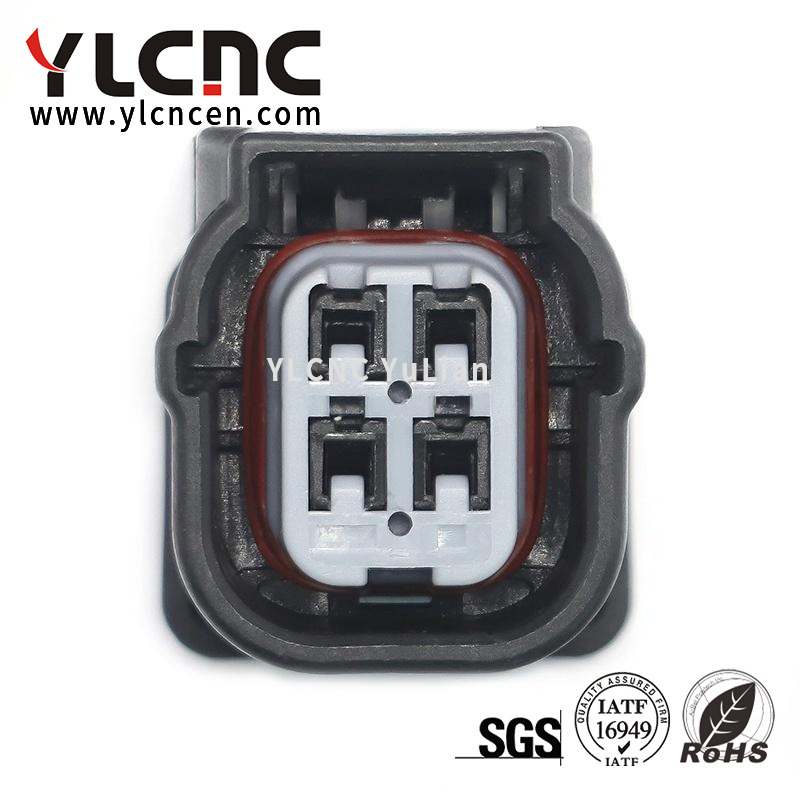
Ingress protection acts as your primary defense against external contaminants. You must aggressively block moisture, heavy dust, and corrosive automotive fluids. Engine oils, transmission fluids, and salt spray rapidly degrade exposed metal terminals. An automotive sealed connector solves this problem efficiently. It forms a tight physical barrier around vulnerable contact points.
Manufacturers utilize different engineering approaches to achieve environmental isolation. Mat seals cover the entire rear cavity of a plastic housing. They require wires to push through pre-molded silicone holes. They work perfectly for high-density harness layouts. Conversely, individual wire seals protect each terminal separately. We often call them cable seals. They crimp directly onto the wire insulation. They offer superior isolation for smaller pin configurations.
Material durability dictates the lifespan of these barriers. Silicone offers incredible flexibility across extreme thermal cycles. It maintains its shape even below freezing temperatures. EPDM rubber provides superior resistance to harsh chemical exposure. EPDM resists fuel and heavy oil swelling much better than standard silicone. You must choose the material based on specific fluid risks.
Engineers must specify the correct IP (Ingress Protection) rating for each zone. IP67 components survive temporary submersion in shallow water. IP68 units handle continuous submersion without leaking. IP69K models withstand high-pressure, high-temperature washdowns perfectly.
You should conduct a careful cost-to-benefit analysis before specifying sealed units everywhere. Under-hood and lower chassis locations demand maximum environmental protection. These zones face constant splash and debris. In-cabin connections usually survive perfectly well unsealed. Do not over-engineer interior dashboard components. Adding unnecessary seals increases harness weight and inflates manufacturing costs.
Vague marketing claims of reliability hold zero value in automotive engineering. An interconnect system must pass rigorous, standardized evaluations. Look for strict compliance to USCAR-2 for North American vehicle platforms. European markets demand total adherence to LV214 testing protocols. These unified frameworks standardize exactly how we prove component durability under extreme stress.
Testing Metric | Engineering Purpose | Field Failure Prevented |
|---|---|---|
Vibration and Mechanical Shock | Ensures contact resistance remains stable under intense chassis or engine vibrations. | Intermittent signal loss and dashboard error codes. |
Thermal Shock & Humidity | Tests how plastic housings and rubber seals expand/contract during extreme weather changes. | Moisture ingress and cracked plastic housings. |
Mating/Unmating Force | Balances assembly line worker ergonomics against secure locking retention limits. | Operator fatigue and partially seated wire harnesses. |
Focus heavily on the duration of thermal cycling tests, not just peak temperature ratings.
Check the specific vibration profiles used. Engine-mounted profiles differ vastly from chassis-mounted profiles.
Evaluate resistance changes before and after the environmental conditioning tests.
Never accept simple summary brochures from component suppliers. You must request raw lab data. Ask manufacturers for comprehensive, third-party test reports. Review the actual voltage drop measurements recorded during vibration testing. Authentic validation transparency protects your final vehicle design from unexpected recalls.
Micro-vibrations wear away terminal plating relentlessly over time. This microscopic movement exposes underlying base metals to the air. The exposed metal oxidizes rapidly. Electrical resistance spikes as this oxidation layer thickens. We call this destructive process fretting corrosion. It destroys low-voltage data circuits frequently.
You can mitigate this risk through strategic component selection. Demand high normal-force terminal designs for high-vibration zones. Specify proper contact lubrication at the factory level. Ensure adequate plating thickness to delay the onset of base metal exposure.
Poor assembly techniques often cause individual pins to back out of housings. Missing or unengaged TPAs exacerbate the problem significantly. When a pin backs out, the mating plug fails to make full electrical contact. The circuit experiences intermittent drops or complete failure.
Strict harness manufacturing protocols solve this issue. Make CPA and TPA mechanisms mandatory on your final assembly line. Utilize automated push-click testing equipment. Train operators to listen for the audible mechanical click when inserting wire terminals.
Water exhibits a frustrating ability to travel through stranded wire. It uses capillary action to climb inside the wire insulation. It bypasses the main connector seal entirely. It reaches the metal terminal from the back end. This moisture ingress corrodes pins rapidly from the inside out.
Preventing capillary action requires smart harness layout designs. Route wires properly to avoid creating funnels for water. Design physical drip loops into the harness pathway. Gravity pulls water away from the housing interface. Always match wire insulation sizing exactly to the specific rubber seal diameter. A mismatched seal creates an immediate leak path.
A structured approach vastly simplifies component selection. You must establish exact functional requirements first. Define the absolute maximum voltage and current limits under load. Distinguish clearly between sensitive digital data signals and high-power delivery circuits. Determine the exact operating temperature range the specific vehicle zone will experience.
Divide the vehicle architecture into distinct physical environments. Segregate your design choices based on these specific zones. The engine compartment brings extreme heat and intense mechanical vibration. It strictly requires robust, fully sealed components. The cabin interior offers a stable, protected climate. It benefits greatly from unsealed, high-density, low insertion-force designs.
Selecting components based on static current ratings without checking thermal derating curves.
Ignoring the physical size constraints of the mating header on the PCB.
Specifying heavy sealed units for interior cabin routes where dust and water risks remain negligible.
Audit the electrical and environmental constraints of the exact physical connection point on the chassis.
Shortlist two to three distinct component families demonstrating documented compliance to LV214 or USCAR-2 standards.
Request physical mating samples and full validation lab test reports to support prototype wire harness builds.
The functionality of modern vehicle wiring systems goes far beyond completing a simple electrical circuit. They act as robust mechanical safeguards against severe vibration. They serve as reliable environmental barriers against harsh automotive fluids and weather. Specifying the correct component requires a deep understanding of contact physics, material science, and mechanical retention limits.
Prioritize empirical lab test data during your engineering selection process. Match component attributes exactly to the physical application zone. Avoid relying on generic, unverified component specifications. A well-specified, properly tested connection system fundamentally improves overall vehicle reliability. It inherently lowers warranty risks and ensures critical safety systems remain operational over the vehicle's lifespan.
A: Sealed units feature integrated rubber seals to block moisture, heavy dust, and corrosive chemicals. They are completely necessary for aggressive exterior zones like the engine bay or lower chassis. Unsealed units lack these physical barriers, making them lighter, cheaper, and more compact. They are strictly designed for protected interior environments like the dashboard or cabin interior.
A: TPA is a secondary plastic locking mechanism inserted directly into the housing body. It physically prevents metal terminals from backing out after wire assembly. It ensures all internal pins are fully seated and properly aligned. It acts as a mechanical fail-safe against high vibration and improper manual insertion on the factory floor.
A: Failures typically occur due to fretting corrosion from micro-vibrations, unexpected moisture ingress, or terminal push-out. You can prevent these critical issues during procurement by enforcing strict testing standards like USCAR-2. Always match the component specifications directly to the environmental zone and demand verifiable lab validation data before signing approvals.


